Rat and mouse article
How Small a Hole Can a Mouse Fit Through?
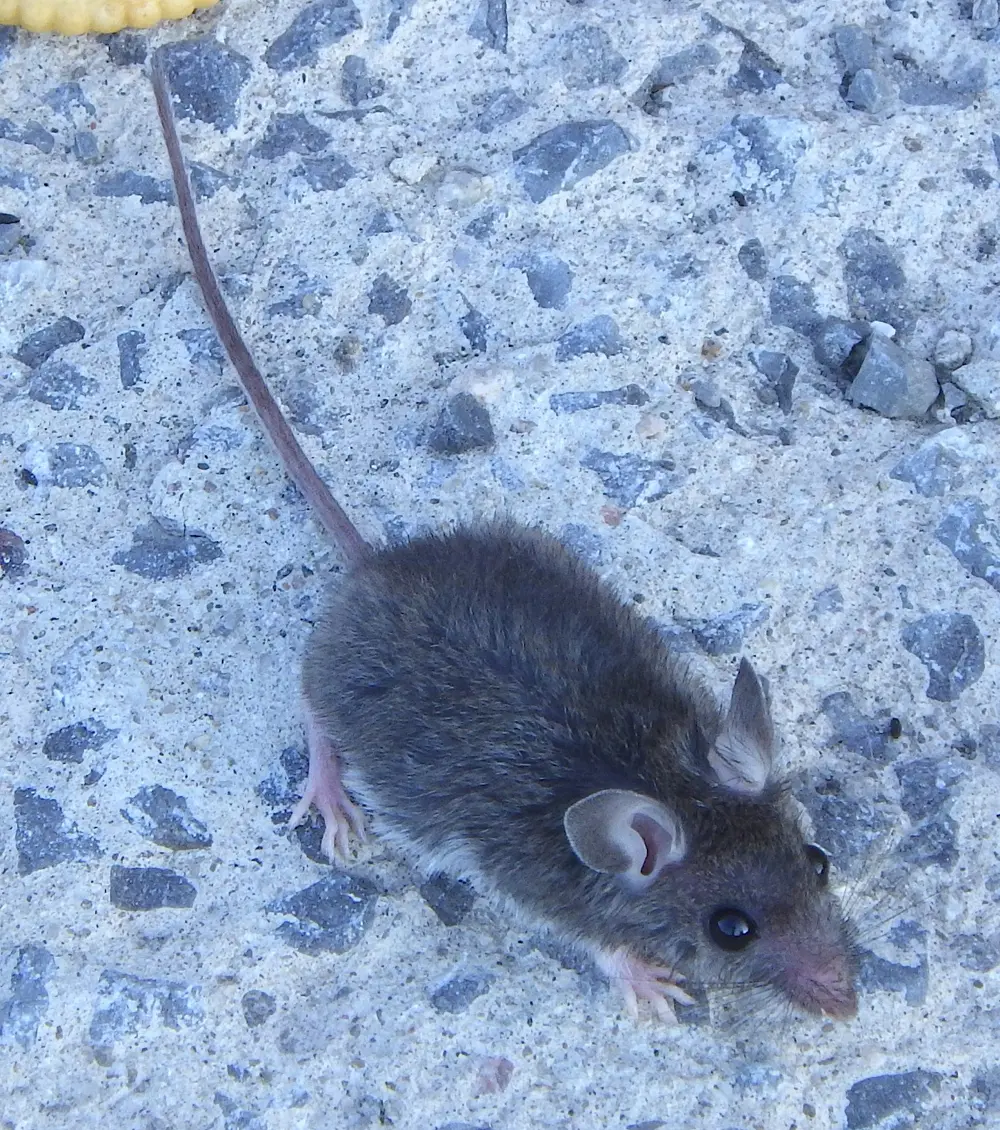
The CDC says a mouse can fit through a hole the width of a pencil, about a quarter inch or 6 millimeters across. If the head fits, the body follows. Rats need bigger openings, but they gnaw and dig to make small gaps bigger. That's why sealing a house means finding a lot of small holes, not just the obvious ones.
Where pencil-sized gaps hide
The CDC lists the places to check. Outside: the roof among the rafters, gables, eaves and soffits; around windows and doors, especially without weather stripping; between the foundation and the ground; around attic and crawl space vents; and around holes for electrical, plumbing, cable and gas lines.
Inside: under and behind kitchen cabinets, closet floor corners, around the fireplace, behind appliances, around pipes under sinks and washers, around pipes to the water heater and furnace, around floor and dryer vents, in the attic, in the basement or crawl space, around floor drains, and where the floor meets the wall.
The Akron version of that list
Older Akron houses add a few of their own:
- The sill line on stone and early block foundations, where mortar has crumbled
- Open cores along the top course of block walls
- Old coal chutes covered with a board
- Rotted wood frames on basement windows
- The seam where a later addition or porch meets the original house
- Worn garage door seals and bent bottom corners on newer homes
- Stucco edges that have pulled away from the foundation in Goodyear Heights
How to test a gap
If a pencil slides into a hole, a mouse can use it. Look for clues that it's in use: droppings nearby, gnaw marks on the edges, and dark greasy rub marks where fur brushes past. Daylight under a door or around a pipe from inside the basement on a sunny afternoon shows you gaps you'd never find from outside.
Not sure if it's rats or mice? You don't have to know. Describe what you're seeing.
Call (330) 300-0969Steel wool or copper mesh?
The CDC recommends filling small holes with steel wool and putting caulk around it to keep it in place. Copper mesh works the same way, packed tight into the gap and covered with sealant or mortar. The main difference is that steel wool rusts, which leaves stains and breaks down in damp spots. Copper doesn't rust, so it holds up better in a damp Akron basement or around an outdoor faucet. Stainless steel mesh is another rust-free option.
Neither works alone. Mice can pull loose mesh out, so it needs sealant, mortar or a cover over it.
Bigger holes and what not to use
For larger holes, the CDC lists lath screen or metal, cement, hardware cloth and metal sheeting. Cut material to fit around pipes, and use flashing around the base of the house where needed. Hardware cloth is the go-to for vents, crawl space openings and shed skirts. Concrete patch closes holes under garage slabs.
Expanding foam by itself is a weak choice. The CDC mentions spray foam only as a way to hold steel wool in place, and mice chew through foam alone. The same goes for plain caulk, rubber and wood over an active hole.
A one-hour sealing walk for an Akron house
If you only have an hour, check these in order:
- The garage door bottom seal and the two bottom corners
- The door between the garage and the house, including the sweep
- The gas, water and electric entries where they come through the foundation
- The dryer vent flap and the AC line set where it enters the wall
- Under the kitchen and bathroom sinks where pipes come through
- The basement sill line on the side of the house where you hear the most noise
Not sure if it's rats or mice? You don't have to know. Describe what you're seeing.
Call (330) 300-0969Rats need bigger gaps, but they make them
Norway rats can't use a pencil-sized hole the way a mouse can, but they gnaw and dig. A gap under a garage door that's a little too small today can be chewed wider in a night. Rats also burrow under slabs and along foundations, which is why rat sealing leans on concrete patch, hardware cloth buried below the soil line and metal flashing at the base of doors and sheds.
Seal in the right order
If mice are already inside, don't close everything at once. Trap first, then close the outside openings as activity drops so nothing gets stuck in the walls. Interior gaps around pipes and cabinets can be closed earlier to keep mice out of the living space.
Sealing an older house thoroughly is slow, careful work, much of it on a ladder or behind boxes in the basement. If the list is long, rodent exclusion is the service that handles it. The old basement guide covers what you can check yourself.
Not sure if it's rats or mice? You don't have to know. Describe what you're seeing.
Call (330) 300-0969Common questions
How small a hole can a mouse get through?
The CDC says a hole the width of a pencil, about a quarter inch or 6 millimeters.
Is steel wool or copper mesh better?
Both work packed tight and covered with sealant. Copper and stainless steel don't rust, which helps in damp basements.
Will spray foam keep mice out?
Not on its own. Mice chew through it. Use mesh or metal with sealant or mortar over it.
How do I find gaps I can't see?
Check from inside on a sunny day for daylight, and look for droppings, gnaw marks and rub marks near pipes and corners.