Getting Mice Out of the Walls in Akron Homes
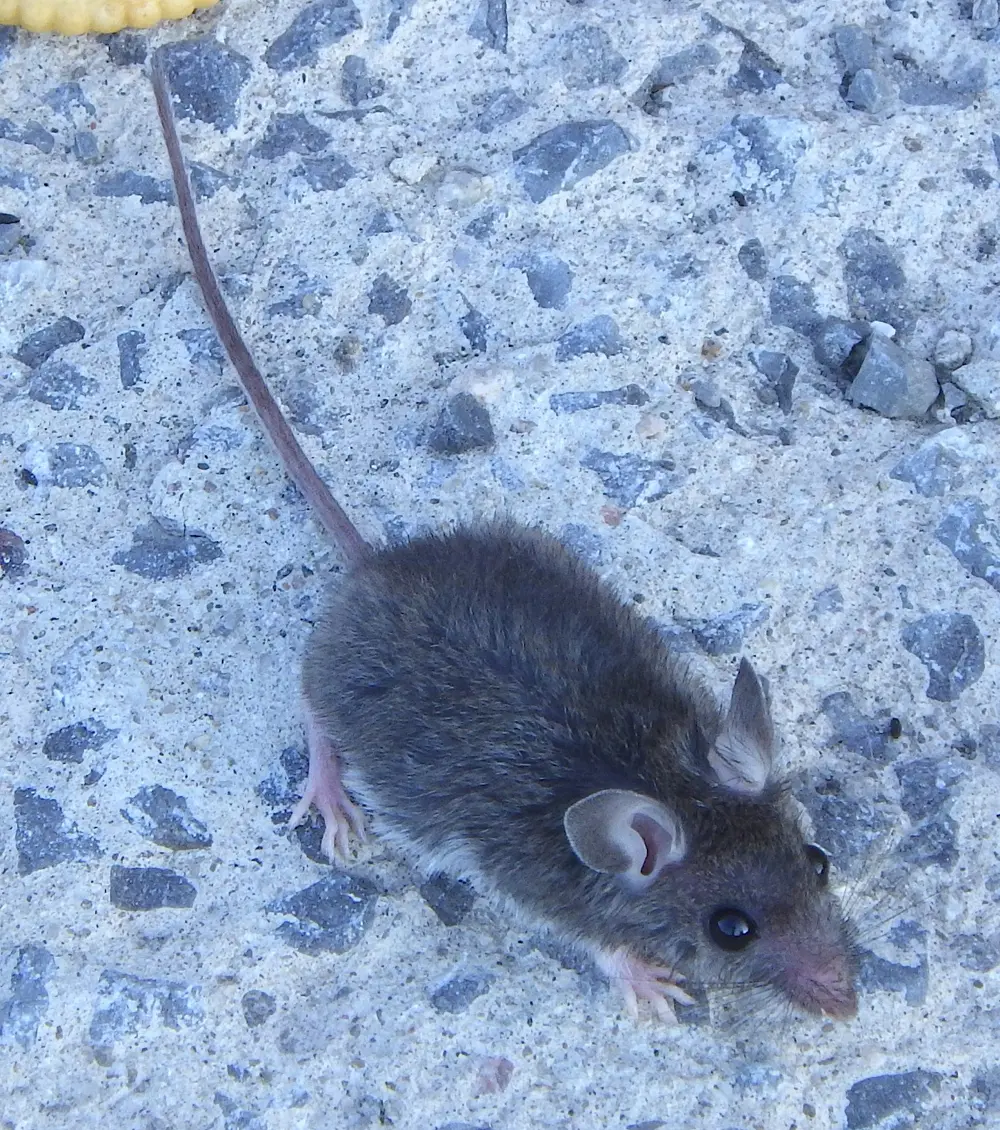
Light scratching inside a wall at night, usually right after the house goes quiet, is almost always mice. They travel inside wall cavities between the basement and the upper floors, and they nest in the insulation. You can get them out, but you can't trap a mouse inside a closed wall. The work is about finding where they get into the wall and catching them where they come out.
Akron's older houses are especially good at this. Many have open stud bays that run from the basement sill all the way up, so a mouse that gets in at the foundation can be in the bedroom ceiling the same night.
What a thorough job includes
Mice in walls take more than a few traps by the baseboard. A complete job should cover:
- Finding the wall cavities they use, often near pipes, the chimney or the furnace flue
- Checking the basement sill line where the walls start
- Looking at the attic top plates where walls end
- Trapping where the mice come out of the walls: basement, kitchen cabinets, attic
- Sealing the entry points in the right order
- Follow-up checks until the noise stops
Step by step: getting them out
The technician starts by listening to your description. Where is the noise, what time and which wall? Noise in an outside wall near the kitchen often traces back to the gas line or water line hole in the basement below. Noise near the chimney often means the gap around the chimney chase.
Traps go where the wall cavities open up: under the kitchen sink where the pipes come through, in the basement along the sill, in the attic along the top of the walls. Bait inside walls is a bad idea, because a mouse that eats it can die in the cavity and smell for weeks. If any bait is used, ask that it stay in locked stations outside the living space.
Sealing happens in stages. The openings into the house from outside get closed once activity drops, so nothing ends up stuck inside. Gaps between the wall cavities and the living space, like holes around pipes under sinks, get closed with steel wool or copper mesh and sealant. The CDC notes that a mouse can fit through a hole the width of a pencil, about a quarter inch.
Not sure if it's rats or mice? You don't have to know. Describe what you're seeing.
Call (330) 300-0969Why Akron walls are such good mouse highways
Houses built in the 1910s and 1920s for rubber workers in Goodyear Heights, Firestone Park and University Park often have plaster walls, open framing and decades of plumbing and wiring changes, each one a new hole between floors. Stucco houses in Goodyear Heights can crack where the stucco meets the foundation, and mice slip behind it straight into the wall.
Doubles and multi-unit houses add another layer, since mice move between units through shared walls. In that case the whole building needs work. See doubles and apartment buildings.
What you can do tonight
Set a few snap traps where the walls open up: under the kitchen sink, behind the stove and along the basement wall below the noise. Use a small dab of peanut butter and put the trigger end against the wall. Keep pet food and fruit bowls put away overnight, and close the cabinet doors under sinks.
Don't drill holes in the wall to drop bait in, and don't plug the obvious holes before trapping. A mouse sealed inside a wall cavity is the start of a smell problem. Write down where and when you hear them for a few nights, since that log helps the technician find the route quickly.
Is it mice or something else?
Mice make light scratching and quick scurrying. Heavier thumping or gnawing can mean a rat, which is less common inside Akron walls but does happen in older houses with stone basements. Daytime noise in the attic or upper walls can mean squirrels. Our article on rodent noises at night goes through how to tell them apart.
Once the walls are quiet, check the attic for droppings. If the insulation is soiled, attic cleanup is the next step.
Not sure if it's rats or mice? You don't have to know. Describe what you're seeing.
Call (330) 300-0969Questions Akron-area homeowners ask before they call
Will the mice in my walls leave on their own?
Not in winter. They're inside because it's warm and there's food. They leave or die only when the food and entry points go away.
Do I have to cut holes in the walls?
Usually not. Mice come out of the walls to eat and drink, so traps go where they exit. Walls are opened only to remove a dead mouse that can't be reached otherwise.
Why do I only hear them at night?
House mice are mostly active at night, and that's when the house is quiet enough to hear them.
Can I put poison in the walls?
It's a poor idea. Mice that eat bait often die inside the wall, and the smell can last weeks. Traps work better indoors.
How long until the scratching stops?
Often a week or two after the entry points are sealed and trapping starts. Older houses with many gaps can take longer.
Related reading
Serving Highland Square and West Akron, Firestone Park, Goodyear Heights, Kenmore, North Hill, Ellet, Merriman Valley, Cuyahoga Falls, Stow, Barberton, Hudson, Green, Tallmadge, Fairlawn, Copley, Munroe Falls, Middlebury, University Park.