Rat or Mouse? How to Tell in an Akron Home
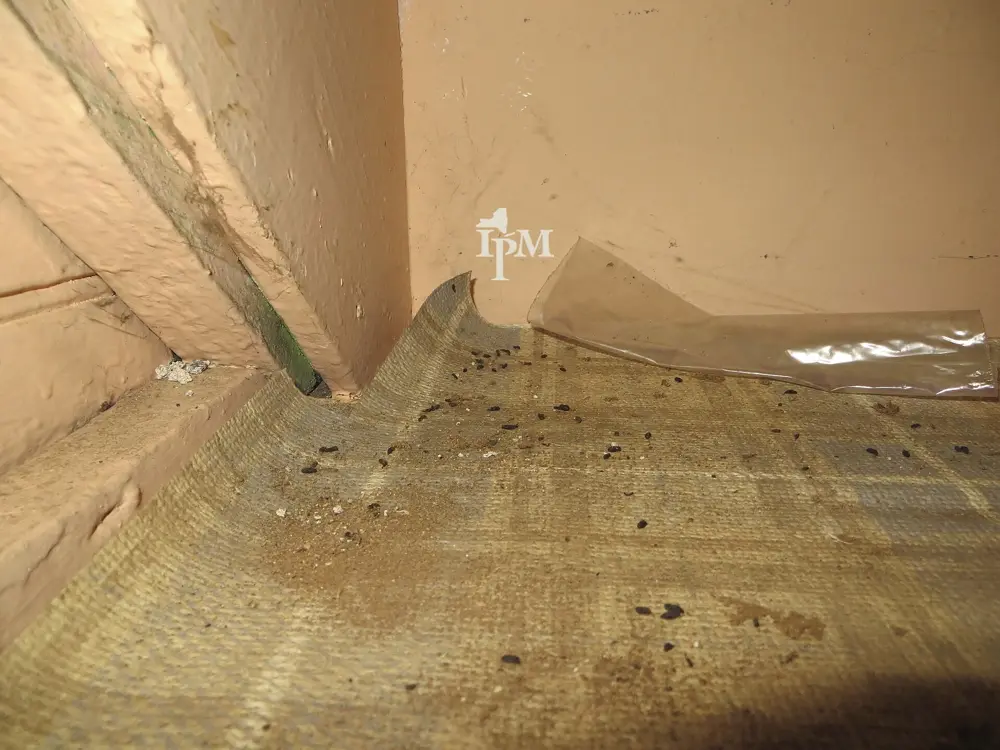
Most of the time you won't see the animal. You'll find what it left behind. Luckily, rats and mice leave pretty different evidence, and with a little detective work you can usually tell which one you have before anyone comes out.
In Akron, it's almost always one of three: the house mouse, the white-footed or deer mouse from the woods, or the Norway rat. Each lives a little differently.
Look at the droppings first
Droppings are the most reliable clue. Mouse droppings are small, about the size of a grain of rice, with pointed ends. You'll find a lot of them scattered along walls, in drawers and on shelves. Rat droppings are much bigger, closer to a raisin, with blunt ends, and they tend to be in clusters near where the rat feeds or travels.
Fresh droppings are dark and shiny. Old ones are dry, gray and crumble. If you find both, you've had them for a while.
Where you find them matters as much as size. A line of droppings along the top of the basement wall or inside a kitchen drawer says mouse. A small pile beside the dog food bin in the garage, or next to a hole in the slab, says rat. Droppings in the attic insulation are nearly always mice, since Norway rats rarely climb that high in Akron houses. A photo on your phone makes it easier to describe when you call.
Sounds, damage and where you find them
Mice make light scratching and skittering noises, often in the walls or ceiling at night. Rats are louder. You may hear thumping, gnawing and heavier movement. Rats chew bigger holes, often with rough edges, about two inches or more across. Mouse holes are small and neat.
Location helps too. Mice are climbers and end up in kitchens, upper floors and attics. Norway rats are burrowers and tend to stay low, in basements, crawl spaces, garages and under sheds. Rat burrows outside are a giveaway: round holes two to four inches wide along the foundation, under the garage slab or by a fence, often with a fan of loose dirt.
- Mice: small pointed droppings, light scratching, small neat holes, kitchens and attics
- Rats: large blunt droppings, heavier noise, bigger rough holes, burrows outside
- Woods mice: like house mice, but more often in garages, sheds and cabins near woods
Why it matters which one you have
Mice and rats need different approaches. Mice can squeeze through a quarter-inch gap and breed fast, so mouse work is about traps along the walls and sealing lots of small gaps. Rats need bigger openings but they burrow, so rat work happens more outside, with locked stations along the fence and foundation, burrow work and heavier sealing with hardware cloth and concrete.
Homes in Kenmore near Summit Lake and the alleys of North Hill see more rats. Homes backing onto woods in the Merriman Valley near the park see more woods mice. Most of Akron sees plenty of house mice each fall.
Not sure if it's rats or mice? You don't have to know. Describe what you're seeing.
Call (330) 300-0969What to do with what you find
Don't sweep or vacuum the droppings. Wear gloves, spray them with disinfectant or a bleach mix, let them soak, then wipe up and bag it. Don't put loose poison down, and don't try to handle a live rat.
If it's mice, the page on getting mice out of an Akron house covers what a visit looks like. If it's rats, see rat control. If you found droppings in the attic insulation, attic cleanup is a separate step. And if you still can't tell, call and describe what you found. That's often enough to sort it out.
Questions Akron-area homeowners ask before they call
Can I have rats and mice at the same time?
Yes, though it's less common indoors. Rats often stay outside in the garage or a burrow while mice move into the house.
Do Akron homes get roof rats?
Roof rats are uncommon this far north. In Akron, the rat you'll see is almost always the Norway rat.